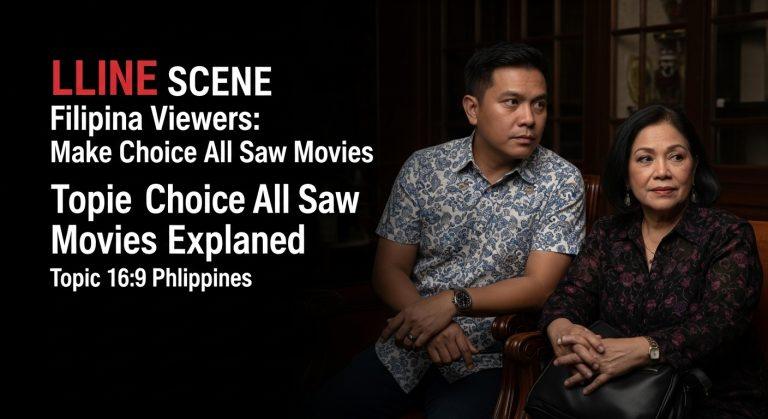
Filipino Movies Philippines: A Balanced Look at Local Film
Updated: April 8, 2026
filipino Movies Philippines are at a crossroads as streaming catalogs expand, festival circuits intensify, and local studios recalibrate how to tell stories that resonate both at home and abroad. This analysis looks at how funding, talent development, distribution, and the shifting tastes of Filipino audiences influence what gets made, how it travels, and which voices find sustainable space within the industry.
Industry Pulse: Filipino Films in the Local Marketplace
Across the archipelago, cinema audiences remain a mix of traditional theater-goers and digital natives who bounce between pirated streams, licensed streaming catalogs, and occasional big-screen events. The local market has shown resilience when projects align with clear regional sensibilities—stories rooted in Manila’s urban pulse, provincial life, or provincial folklore retold for contemporary sensibilities. In this landscape, Filipino filmmakers increasingly balance intimate storytelling with productions that can travel beyond the Philippines. The upshot is a slowly expanding ecosystem where script development, casting depth, and production values matter as much as festival prestige or box-office receipts. While some titles lean into high-concept visuals to capture international attention, others lean into cultural specificity that still resonates with local audiences.
Production Realities for Filipino Movies Philippines
Production realities in the Philippines encompass budget constraints, talent pipelines, and the evolving meaning of “made in the Philippines.” Local crews have built competencies in stunt coordination, practical effects, and safety protocols, somewhat counterbalancing a history of limited resource budgets. The presence of skilled stunt teams—often highlighted in action-centric projects—demonstrates a growing specialization within the national industry. This specialization matters not only for entertainment value but for enabling collaborations with international studios that seek efficient, safer, and culturally informed production workflows. In practical terms, producers weigh cost containment against the demand for higher production values, while local unions and training programs push for standardized practices that could raise the overall quality of Filipino Movies Philippines without eroding the sector’s affordability for emerging filmmakers.
Global Reach and Local Pride
Global gatekeeping around distribution has shifted with streaming platforms, festival circuits, and co-production arrangements. Filipino projects now have more pathways to international audiences, yet navigating these channels requires careful localization—subtitled dialogue that preserves meaning, marketing that respects cultural nuance, and partnerships that protect local ownership while enabling wider visibility. The tension between global reach and local pride is not a zero-sum game; it often manifests as strategic collaborations with foreign producers, while prioritizing storytelling that remains authentically Filipino in tone, setting, and character. The evolving ecosystem suggests that Filipino Movies Philippines can thrive by combining strong narrative specificity with accessible production practices that meet international safety and quality benchmarks.
Audience and Platforms: How Viewers Engage
Audiences in the Philippines are increasingly multi-platform—watching in multiplexes, on mobile devices, and via streaming libraries that curate regional content. The result is a demand for stories that are both locally meaningful and broadly comprehensible. Filmmakers and distributors are experimenting with release strategies, including limited theatrical runs paired with streaming debuts, to maximize viewing windows and revenue streams. While the appetite for big-budget spectacles remains, there is growing appreciation for intimate dramas, genre hybrids, and films that foreground Filipino voices and experiences. In this milieu, consumer feedback—ranging from social media responses to festival feedback—helps shape future projects, creating a feedback loop where audience input can influence script choices, casting, and production planning across Filipino Movies Philippines.
Actionable Takeaways
- Invest in local talent development pipelines to sustain a steady supply of skilled directors, writers, and stunt professionals suited to Filipino storytelling needs.
- Balance production budgets with clear targets for international co-productions that preserve local ownership and cultural authenticity.
- Adopt standardized safety and production protocols to meet international expectations while maintaining cost-effectiveness for domestic projects.
- Leverage streaming platforms to showcase diverse Filipino voices, pairing regional stories with wide accessibility to maximize reach.
- Foster partnerships between studios, festivals, and education institutions to strengthen a robust ecosystem that supports both independent and larger-scale projects.
- Use audience insights from social and festival circuits to inform future development, casting, and marketing strategies for Filipino Movies Philippines.