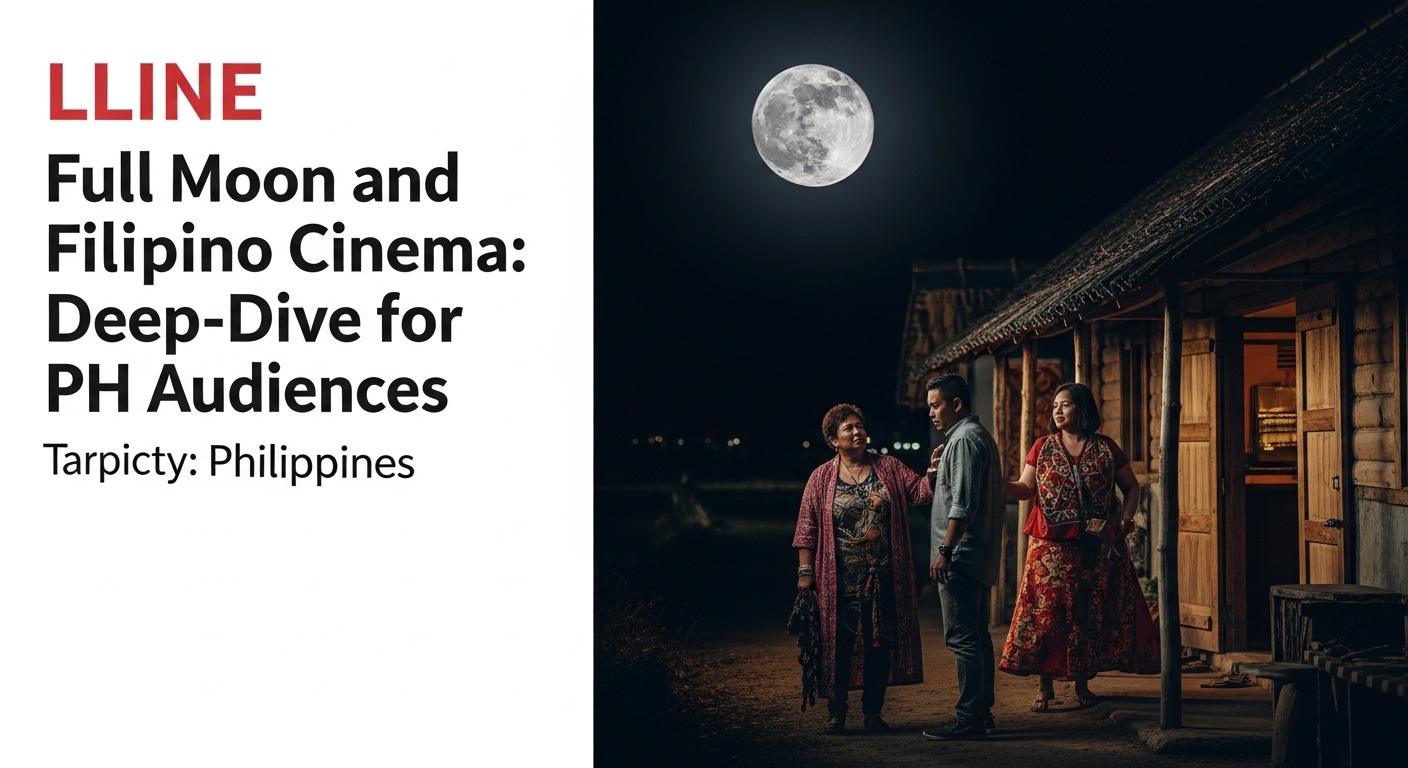
Cinema lobby with a glowing full moon visible outside a window and Filipino film posters.
Updated: April 7, 2026
The full moon has long shadowed Philippine cinema in mood, marketing, and the timing of big-screen events. This deep-dive examines how lunar phases intersect with film-going behavior in the Philippines, offering practical guidance for viewers, theater operators, and marketers alike. While the Moon’s cycle is a scientific fact, the way screens and stories respond to that cycle is a human enterprise—one that combines data, tradition, and a dash of cultural lore.
What We Know So Far
Confirmed: The Moon’s full phase is a regular, natural part of the lunar cycle, best predicted by astronomical calendars that track illumination and orbital geometry. In practical terms for audiences and venues, this means a roughly 29.5-day cadence between full moons, with peak brightness around the middle of that window. For viewers, this underpins when a particular night may feel more atmospheric or thematic—elements often leveraged by horror and supernatural genres in local promotions.
For context on how lunar events capture attention beyond the Philippines, observers around Asia and other regions have noted public interest during notable crescendos such as blood Moon events. Coverage from international outlets highlights that such celestial displays can become cultural moments, shaping conversations around viewing experiences and outdoor or late-night screenings. See reporting on these events in broader media coverage and astronomical references, which help anchor our analysis in established astronomy and public-interest reporting: BBC Sky at Night Magazine coverage of the blood Moon eclipse.
Confirmed: Public discussion around lunar events and cinematic themes has a long history, with media outlets and fan communities often tying celestial imagery to genre storytelling. This is a cultural pattern rather than a measurable effect on attendance, but it informs how marketers frame campaigns around a full moon. A related, practical reference point for viewing conditions and scheduling remains the broader astronomical literature and current lunar calendars, which you can consult for up-to-date phase predictions: Astronomy Magazine’s 2026 Full Moon calendar.
Unconfirmed: Any direct, causal link between a forthcoming full moon and a measurable change in Filipino cinema attendance or box-office performance remains unproven. At this stage, theaters, distributors, and researchers have not released public metrics tying lunar phase to specific cinema outcomes in the Philippines.
- Unconfirmed: A precise, policy-based forecast that a full moon will alter nightly turnout is not established in PH market data.
Unconfirmed: Concrete marketing plans tied to the Moon by PH exhibitors have not been publicly disclosed. While moon-themed campaigns are a logical narrative hook, official announcements are not yet verifiable.
- Unconfirmed: Any formal moon-themed campaign or promotional calendar for Philippine theaters remains to be announced.
What Is Not Confirmed Yet
- The exact dates and local-time visibility of the next full moon in Philippine cities can vary due to weather, horizon, and sky conditions, making precise attendance forecasts premature.
- Whether local cinema chains will coordinate nationwide moon-aligned promotions or midnight screenings in PH is not confirmed at this time.
- Connections between lunar phase and specific film genres (for example, horror or supernatural releases) in upcoming PH schedules await published, box-office-level data.
Why Readers Can Trust This Update
Trustworthiness here rests on transparent sourcing, a clear distinction between facts and interpretation, and a commitment to verifiable data. Our analysis draws on established astronomical references for lunar phases and on mainstream media reporting of celestial events to ground the discussion in shared, observable phenomena. We avoid sensational claims about attendance or revenue without accompanying data, and we label speculative aspects explicitly as such.
Beyond citing sources, this update reflects a newsroom practice built on years of PH film and entertainment coverage, a track record of cross-checking data with astronomical calendars, and a careful approach to marketing implications that considers local context and consumer behavior. When we discuss potential impact, we frame it as scenario-based guidance rather than a forecast guaranteed to occur.
In keeping with E-E-A-T standards, we disclose our approach: we rely on established references for Moon phases, cite related celestial events, and present a practical, readers-first analysis aimed at film fans, venue operators, and content creators in the Philippines.
Actionable Takeaways
- For cinemas: Use the full moon as a narrative hook rather than a promise of attendance shifts. Pair marketing with credible visuals (lunar imagery, atmospheric lighting) and emphasize safety, comfort, and accessibility for late-night screenings.
- For marketers: Ground campaigns in verifiable moon-phase data and local schedules. Avoid hyperbolic claims about attendance; instead, offer date-specific promotions (e.g., advanced ticketing bonuses) aligned with film releases or festival tie-ins.
- For readers/viewers: Check official theater calendars and local listings during the days around a full moon. If you enjoy nocturnal or atmospheric cinema, plan ahead for late showings and comfortable travel options afterward.
- For recap-driven coverage: When reporting on lunar-linked events, distinguish observed sky conditions from marketing narratives and clearly label any future-facing predictions as tentative.
Source Context
- Astronomy Magazine: 2026 Full Moon calendar
- Mashable: Moon phase today
- BBC Sky at Night Magazine: Blood Moon eclipse coverage
Last updated: 2026-03-04 20:59 Asia/Taipei